
Arroz de Marisco (Seafood Rice)
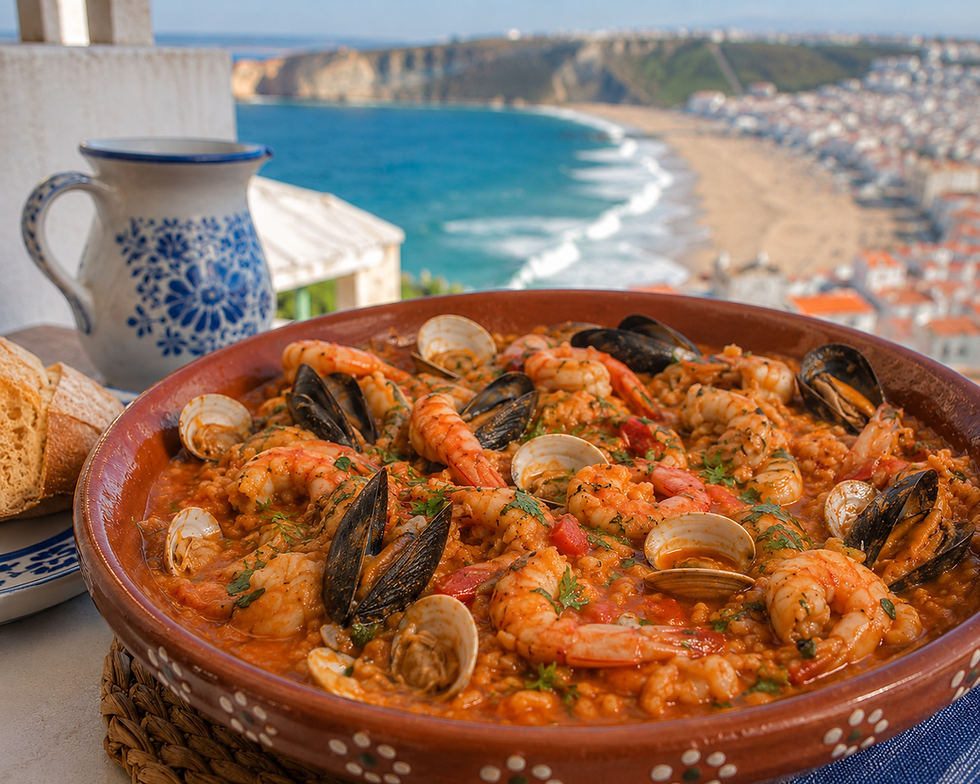
There are certain dishes that instantly transport me back to Portugal. The smell of fresh bread drifting out of a bakery. Sardines sizzling over charcoal on a summer afternoon. And a steaming pot of arroz de marisco sitting in the middle of the table with everyone armed with nothing more than a spoon and a very healthy appetite.
If you've never had Portuguese seafood rice before, don't picture paella. And don't picture risotto. Arroz de marisco lives somewhere in between.
The rice is tender but never mushy, and the sauce is rich, silky, and just loose enough to coat every grain. It's the kind of meal that practically demands a hunk of crusty bread nearby to chase every last drop around the bowl.
One spoonful turns into another. Then another. Before long, you're scraping the bottom of the pot and wondering where it all went. Ask me how I know.
Passport to Portugal
Region: Coastal Central Portugal
Category: Seafood
Difficulty: Intermediate
Best Enjoyed: Straight from the pot while it's still steaming.
Pairs Well With: Crusty pão caseiro, a crisp vinho verde, and good company.
Portuguese Word of the Day: Marisco (Shellfish)
Makes Your Kitchen Smell Like: A seaside restaurant somewhere between Nazaré and Setúbal.
Recipe Snapshot
Prep Time: 30 minutes
Cook Time: 30 minutes
Total Time: 1 hour
Servings: 6
Why You'll Love This Recipe
Rich, tomato-based seafood broth.
Creamy without using a drop of cream.
Perfect for entertaining.
Surprisingly easy once everything is prepped.
Every spoonful tastes like the Portuguese coast.
Ingredients
2¼ cups Carolino rice (400g)
Substitution: Arborio rice is the closest substitute if Carolino isn't available.
6¾ cups of seafood stock or water - stock preferred (1.6l)
Seafood
1 pound shrimp (450g), peeled, shells and heads reserved
1 pound mussels (450g), cleaned
1 pound littleneck or Manila clams (450g), cleaned
8 ounces squid (225g), cut into rings
Substitution: Frozen mix works beautifully - especially if you can get your hands on a product of Portugal.
Aromatics
3 tablespoons olive oil (45ml)
1 small onion, finely diced
3 garlic cloves, minced
1 red bell pepper, cut into thin strips
2 bay leaves
1 fresh malagueta
Substitution: One Thai bird's eye chili or one Fresno pepper.
A handful of fresh parsley or cilantro, if you wish
(Depending on where your family falls in the great parsley vs. cilantro debate.)
Sauce
3 tablespoons tomato paste (50g)
1 cup tomato pulp/passata (240g)
Substitution: Plain tomato purée works perfectly.
⅓ cup dry white wine (80ml)
Salt, to taste
Instructions
Step 1: Prep the Seafood
Clean the mussels by removing the beards and scrubbing the shells. Place the clams in cold salted water for about 30 minutes, changing the water once or twice to encourage them to release any sand.
Peel the shrimp, reserving a few whole ones for serving if you'd like. Don't throw away the shells just yet. They're full of flavor.
Step 2: Steam the Shellfish
Heat a generous drizzle of olive oil in a large pot. Add one smashed garlic clove, followed by the mussels and clams. Cover and cook for about 3 minutes, shaking the pot occasionally until the shells open.
Remove the seafood. Discard any unopened shells.
Strain and reserve every drop of that incredible cooking liquid. That's liquid gold.
Remove most of the shellfish from their shells, leaving a handful intact for presentation.
Step 3: Build the Base
In the same pot, heat another drizzle of olive oil. Cook the onion, bell pepper, remaining garlic, chili, and a few parsley (or cilantro) stems until softened.
Step 4: The Secret Ingredient
Add several shrimp heads and shells to the pot. Using the back of a wooden spoon, gently press them to release all those intensely sweet seafood juices.
It might not look glamorous...But this is one of those little Portuguese tricks that makes all the difference. After a few minutes, remove and discard the heads and shells along with the chili and stems.
Step 5: Build the Sauce
Stir in the tomato paste and cook for about a minute. Add the tomato pulp and cook for another few minutes before pouring in the white wine. Let it simmer until the alcohol has completely evaporated.
Step 6: Add the Squid
Stir in the squid rings and cook for about 2 minutes. Not long enough to fully cook them. Just enough for them to start releasing their sweetness into the sauce. Then remove and reserve with the clams and mussels.
Step 7: Add the Liquid
Pour in the reserved shellfish broth. Add seafood stock and bring everything to a gentle boil. Taste before adding salt. The shellfish broth and seafood stock may already be doing all of the work.
Step 8: Cook the Rice
Add the Carolino rice and stir well. Cover and cook over low heat for about 10 minutes.
Step 9: Finish the Seafood
Add the shrimp, and continue cooking for another 5 minutes.
Turn off the heat. Fold the mussels, clams and squid back into the rice.
Let everything rest for 5 minutes with the lid slightly ajar. The rice should be creamy. Not dry. Not soupy. Somewhere beautifully in between.
Sprinkle with either parsley or cilantro as desired. Although depending on the household, this could cause a great debate about which is better in this dish. Just like with Monopoly family game night, approach with caution.
Tuga Tip
If your rice starts looking too dry before it's fully cooked, don't panic. Add a splash of hot water or seafood stock. Portuguese seafood rice should flow gently across the plate, not stand at attention like a molded side dish.
The biggest mistake people make with seafood rice is overcooking the seafood. The mussels and clams are already cooked. The squid and shrimp only needs a couple of minutes. Treat them gently, and they'll reward you with perfectly tender bites instead of rubber bands.
How We Enjoy It in My Portuguese Casa
This is one of those meals that goes straight into the center of the table. No fancy plating. No towering presentations. Just a big pot, plenty of spoons, warm bread, and people helping themselves.
Someone always reaches for another piece of bread. And someone almost always scrapes the bottom of the pot before dinner's officially over. Honestly... That's how I know it turned out right.
Good to Know
Can I use frozen seafood?
Absolutely. Good-quality frozen seafood is often frozen right on the boat and works wonderfully in this recipe.
Do I have to use Carolino rice?
If you can find it, yes. Its ability to absorb flavor while staying creamy is exactly what makes arroz de marisco so special. If not, Arborio is your next best option.
Why save the shellfish broth?
Because it's packed with flavor you simply can't buy in a carton.
Can I make this ahead?
Seafood rice is at its absolute best the day it's made. Leftovers are still delicious, but the rice will continue absorbing the broth as it sits.
Can I make this with different seafood?
Your house, your rules. Of course you can. I've also seen this dish with pieces of choriço and chicken before. But don't go crazy! The star should be the seafood after all.
Can I make seafood stock instead of buying it?
Do Portuguese people have an obsession with codfish??? Yes, of course! And may I argue that it's better with homemade stock. In fact...
Place shrimp shells and heads into a saucepan with:
4 cups water (950ml)
Half an onion
1 garlic clove
A few parsley stems
1 bay leaf
Bring to a gentle simmer and cook for about 20 minutes. Strain and reserve the stock.
This alone will make your arroz taste ten times better.
One Last Bite
Some recipes remind you of a place. Others remind you of a person. Arroz de marisco somehow manages to do both.
Maybe it's because seafood has always been woven into Portugal's story. Or maybe it's because a big pot of seafood rice has a way of slowing everyone down long enough to share a meal together.
Whatever the reason, this is one of those dishes that makes a regular weeknight feel like a celebration. And around my Portuguese casa...That's reason enough to make it.