
The Pastel de Nata: Portugal's Sweetest Obsession (And Why Everyone Claims to Make the Best One)
If you've ever eaten a warm pastel de nata and immediately considered buying a one-way ticket to Portugal with no hope of looking back... first of all, welcome. Second, you're not alone.
Few foods have become as iconic as Portugal's beloved custard tart. Crispy, flaky pastry. Silky egg custard. A beautifully blistered top. A dusting of cinnamon if you're feeling traditional. One bite, and suddenly you're convincing yourself that a second... or third... is just research. One more, just to be sure.
But here's the thing. The pastel de nata isn't just a pastry. It's history. It's survival. It's friendly rivalry. And, depending on who you ask, there's only one place that truly makes the original.
Let's settle in.
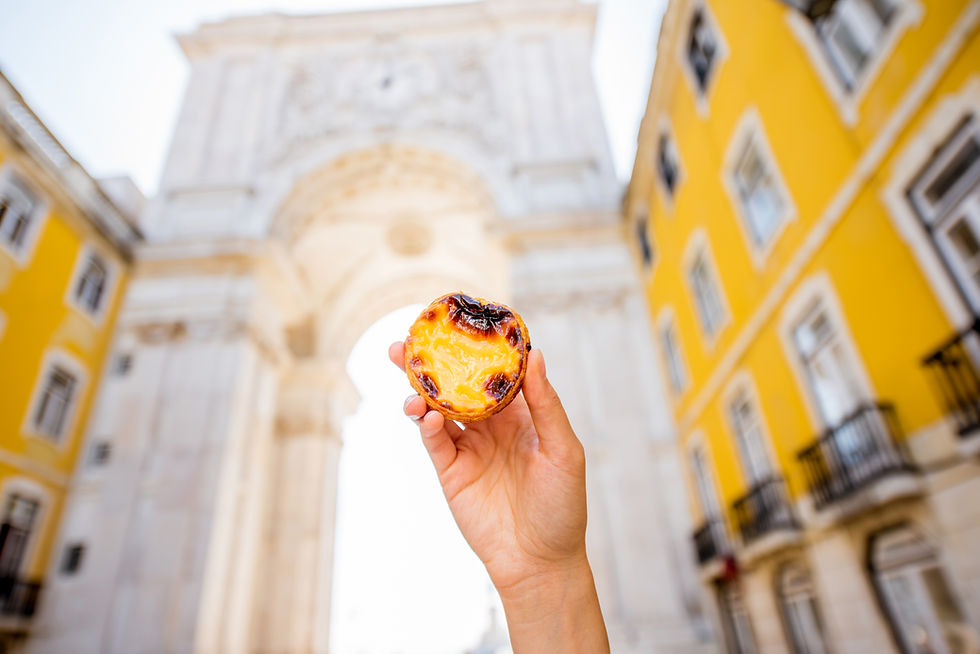
It All Started in a Monastery
Long before Portuguese bakeries tempted us from every street corner, monks at the Monastery of Jerónimos in Belém were using egg whites to starch their robes, clarify wine, and even bind books. That left them with an abundance of leftover egg yolks, and being resourceful (and probably possessing a healthy sweet tooth), they began experimenting.
Sugar had become increasingly available thanks to Portugal's global trade routes, and before long those leftover yolks found their way into flaky pastry shells. One delicious accident later, history was made.
How the Pastel Nearly Disappeared
In 1834, religious orders were dissolved throughout Portugal, forcing monasteries to close. To survive, the monks of Belém reportedly sold their secret custard tart recipe to a nearby sugar refinery. Just a few years later, in 1837, that recipe became the foundation for what is now the world's most famous custard tart bakery.
More than 185 years later, they're still baking from that closely guarded recipe, and they're still not telling anyone exactly what's in it.
Pastel de Belém vs. Pastel de Nata
Here's where things get interesting so buckle up buttercup.Every Pastel de Belém is a pastel de nata, but not every pastel de nata is a Pastel de Belém.
The bakery in Belém owns the trademark for the name Pastéis de Belém because it uses the original monastery recipe. Everywhere else in Portugal, they're called pastéis de nata. Different name. Different recipe. Same remarkable ability to disappear before you've even finished your espresso.
Is There Really a Difference?
Ask ten Portuguese people and you'll probably get twelve opinions.
Some swear the Belém recipe is richer. Others insist their neighborhood bakery makes a better pastry. Some love a deeply caramelized top, while others prefer a creamier custard. Some never eat one without cinnamon, while others argue a great nata shouldn't need anything at all.
There may never be a universal answer, but there is one thing nearly everyone agrees on: they're best eaten warm, preferably with a freshly pulled bica.
The Great Cinnamon Debate
Speaking of opinions, let's talk toppings.
Should you sprinkle cinnamon on your pastel de nata? Plenty of people wouldn't dream of eating one without it, while others believe a truly exceptional nata should stand on its own. Powdered sugar sparks similar debate.
Welcome to Portugal, where even pastry comes with passionate opinions.
The Secret Isn't the Custard
Most people assume the custard is what makes a great pastel de nata. They're only half right.
The real magic is in the pastry. It should be crisp enough to shatter with each bite while still holding that silky custard inside. Finding that perfect balance between buttery layers and creamy filling is what separates a good nata from one you'll spend years thinking about.
Where to Find the Best Pastéis de Nata in Portugal
Choosing the "best" pastel de nata is almost impossible, but these bakeries consistently earn their place in the conversation.
Pastéis de Belém (Lisbon)
If you've never been, go. Yes, there will probably be a line, and yes, it's popular with tourists. Neither of those things happened by accident. The bakery has been serving its famous pastries since 1837, and they're still worth the wait.
Manteigaria (Multiple Locations)
Ask locals for a recommendation and Manteigaria almost always comes up. Watching tray after tray of fresh natas come straight out of the oven is part of the experience, and they're every bit as good as they look. Oh, and don't tell anyone else, but these are my mom's favorite.
Castro (Porto)
Porto has quietly become one of Portugal's best pastry destinations, and Castro has built an almost cult-like following. Their pastry is beautifully crisp, the custard is wonderfully creamy, and the caramelization is spot on.
Fábrica da Nata (Multiple Locations)
Consistently excellent and easy to find throughout Portugal, Fábrica da Nata is a fantastic choice if you're traveling and don't want to spend half your day waiting in line.
Can You Eat Just One?
Technically? Yes. Realistically? Probably not.
Pastéis de nata have a funny way of convincing you that one more couldn't possibly hurt. Before you know it, you've polished off three, your espresso has disappeared, and you're already planning tomorrow morning's breakfast.
No judgment. We've all been there.
One Last Bite
The pastel de nata isn't just Portugal's most famous dessert. It's a story of ingenuity, resilience, craftsmanship, and a country that somehow turned leftover egg yolks into one of the greatest pastries the world has ever tasted.
Whether you're enjoying one in a tiny village café, standing outside the famous bakery in Belém, or baking a batch in your own kitchen halfway across the world, you're taking part in a tradition that's delighted people for nearly two centuries.
Just promise me one thing. Eat them warm. Cinnamon and powdered sugar, optional. Or is it??