
Celebrating Portuguese Heritage Through Culinary Traditions
Portugal is a tiny country with a very serious commitment to feeding people until they say, “I’m full,” and then feeding them again anyway.
But Portuguese food is so much more than what’s on the plate. It’s history. It’s family. It’s that one Tia who insists her arroz doce is better than everyone else’s (by the way, it's Vovó's). It’s coastal villages, mountain towns, long Sunday lunches, crowded festival streets, strong bica (espresso), fresh bread, grilled sardines, and recipes that somehow survive generations without ever being written down properly - most of the time.
Portuguese cuisine is shaped by geography, tradition, and a whole lot of saudade. From the seafood-heavy dishes of the coast to the heartier meals of the interior, every region has its own personality, its own ingredients, and its own way of saying, “Sit down. Eat.”
And honestly? That might be the most Portuguese thing of all.
Why Food Matters So Much in Portuguese Culture
In Portugal, food is not just food. It is connection.
It is how families gather, how stories are passed down, how holidays are celebrated, and how love is served, usually with olive oil, garlic, and someone telling you that you look too skinny even if you've eaten your way through Portugal. It's your mom, and Tia, and grandma, singing Fado together in the kitchen while they cook. And your dad telling you another Portuguese history fact with pride in his eyes and a Vinho Verde in his hand.
Meals are where the real magic happens. Around the table, people argue, laugh, remember, gossip, grieve, celebrate, and refill your plate without asking. Food is the thread that ties generations together.
Family, Tradition, and the Sacred Sunday Lunch
If you grew up Portuguese, you know Sunday lunch is not a casual event. It is a production.
There is usually too much food, at least three conversations happening at once, someone talking loudly over everyone else, and a dish that has been made the same way for decades because “that’s how Vovó did it.”
Bacalhau, or salted cod, is one of the great examples of this. Portugal is famous for having hundreds of ways to prepare it, often jokingly said to be one for every day of the year. Bacalhau à Brás, bacalhau com natas, bacalhau à Gomes de Sá, bacalhau cozido. We took one fish and basically built a national identity around it.
Respect.
Festivals, Saints, and Sardines Everywhere
Food is also at the heart of Portuguese celebrations.
During Lisbon’s Feast of St. Anthony or Porto’s São João, the streets come alive with music, dancing, paper decorations, plastic hammers, and the unmistakable smell of grilled sardines in the air.
Sardinhas assadas, caldo verde, bifanas, chouriço, wine, bread, pastries. These festivals are loud, joyful, smoky, and delicious. Basically, Portugal in party form. It's one of the first things my US friends talked about as soon as they returned from their trip.
And like most Portuguese gatherings, the food is not a side note. It is the whole point.
The Ingredients That Define Portuguese Cooking
Portuguese food is built on simple ingredients treated with respect. We are not always fancy, but we are flavorful.
Give us olive oil, garlic, onions, herbs, good bread, fresh seafood, potatoes, rice, beans, pork, and a little piri-piri, and we will somehow make something that tastes like home.
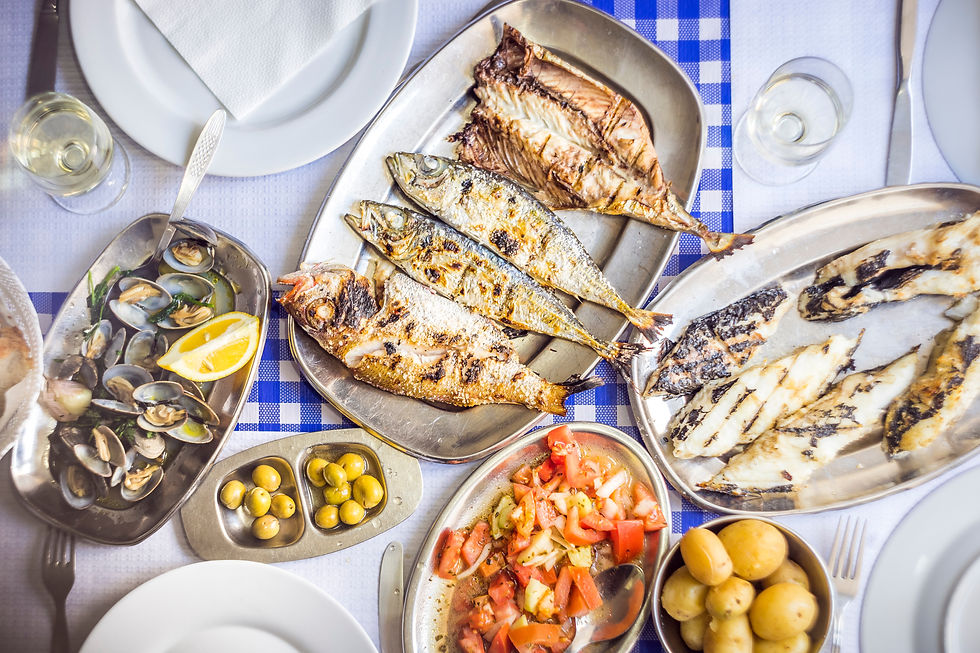
Seafood is a major part of Portuguese cooking thanks to our long coastline. Sardines, cod, octopus, clams, shrimp, and all kinds of fish show up in dishes across the country. Grilled, stewed, baked, fried, swimming in olive oil. We do not discriminate.
Olive oil is basically liquid gold in Portugal. It goes in the pan, on the salad, over the fish, on the bread, and occasionally wherever your Portuguese mother decides it belongs, which is everywhere. How do you think I got so tan? I kid... maybe.
And while Portuguese food is not usually extremely spicy, it is full of flavor. Parsley, cilantro, bay leaves, paprika, garlic, and piri-piri all make regular appearances..
A Few Portuguese Dishes Everyone Should Try
Bacalhau à Brás
Okay, okay, I'm biased because it is one of my all time favorites. A cozy, salty, comforting dish made with shredded salted cod, onions, thin fried potatoes, and eggs, usually finished with olives and parsley. It is one of those meals that looks simple but hits every nostalgic button.
Caldo Verde
My mom - and I say this without bias - makes this THE BEST. This classic green soup is made with potatoes, thinly sliced greens, olive oil, and usually chouriço. It is humble, comforting, and perfect with crusty bread. Bonus points if it is served in a bowl that looks like it came from her kitchen.
Pastéis de Nata
Ah...The famous Portuguese custard tart. Flaky pastry, creamy custard, cinnamon - if you know what you’re doing. Best eaten slightly warm with an espresso and absolutely no self-control. So I guess best eaten... with another.
Preserving Portuguese Heritage, One Bite at a Time
In a world where everything moves fast, Portuguese food asks us to slow down.
It reminds us that recipes matter. Traditions matter. The stories behind the dishes matter. The people who taught us how to cook, even if their measurements were “a little bit of this” and “you’ll know when it’s ready,” matter. Teaching the next generation matters.
Today, chefs and home cooks are finding new ways to celebrate Portuguese cuisine while still honoring its roots. Some stick closely to tradition. Others give classic dishes a modern twist. Both have a place at the table, as long as the heart of the food stays intact.
Because Portuguese cuisine is not frozen in time. It is alive. It travels with us. It changes with us. It shows up in new kitchens, new countries, and new generations.
Welcome to the Table
Celebrating Portuguese food is really about celebrating Portuguese life.
It is about family, memory, place, tradition, and that deep feeling of saudade that somehow finds its way into everything we cook.
So whether you are Portuguese-born, Portuguese-descended, married into the chaos, adopted by a Portuguese family, or just here because you had one pastel (or twenty pasteis) de nata and it changed your life, welcome. Pull up a chair. There is always room at The Tuga Table.